|
|
|
|
| ISSUE 65 | NOVEMBER–DECEMBER 2025 |
| |
 |
| |
|
|
| |
|
We hope you are gearing up for a cozy, well-deserved winter break! In this last issue of 2025, we’re focusing on one of the most essential components of skilled reading—fluency. Reading fluency serves as the bridge between word recognition and comprehension, connecting a child’s ability to decode words with their capacity to understand and enjoy what they read. When children develop fluency skills, they are better able to grasp meaning and engage more deeply with text—the goal of reading.
It can be tempting to think of fluency as simply reading quickly, but speed alone does not define a fluent reader. A more complete definition describes fluency as “reasonably accurate reading, at an appropriate rate, with suitable expression, that leads to accurate and deep comprehension and motivation to read” (Hasbrouck & Glaser, 2012, p. 13).
Keep reading to explore practical ways to assess and strengthen reading fluency. You will also find activities designed to help students build accuracy, rate, and prosody so they can read with confidence and understanding.
Hasbrouck, J. & Glaser, D. (2012). Reading fluency: Understanding and teaching this complex skill. Austin, TX: Gibson Hasbrouck & Associates.
|
| |
 |
| |
|
|
| |
|
When you identify that additional instruction is needed in any skill area, one of the biggest challenges is determining where to begin. Finding the ideal point of instruction requires intentional, targeted assessment.
You can begin by informally assessing students’ fluency during reading groups. As you listen, you may observe children who read with little or no expression and do not observe punctuation. Others may have difficulty saying sounds or words correctly; hesitate when reading decodable words or Memory Words; read word-by-word, slowly, and haltingly; or struggle with phrases. You may also observe halting readers have difficulty discussing what they have read. These are all indicators that additional fluency instruction and practice are needed. Keep in mind that children in kindergarten and first grade are still developing as readers, so perfect fluency is not expected. However, consistent observation will help you recognize progress over time and identify students who need additional support.
In addition to informal observation, you may wish to assess fluency more formally by maintaining ongoing records of individual student progress. Document the number of words a child reads correctly per minute, as well as notes about phrasing, expression, and stress. Record the types of errors a child makes and whether the child self-corrects. Look for consistent patterns in errors such as misreading Memory Words or struggling with specific letter-sound correspondences.
These observation records serve as valuable tools for planning targeted instruction. By identifying trends and individual needs, you can design reteaching and reinforcement activities that will flex those fluency muscles.
|
| |
 |
| |
|
|
| |
|
Repeated oral reading is one of the most effective ways to strengthen children’s reading fluency. To keep practice engaging and purposeful, try adding variety to your routine with these fun and flexible approaches.
Echo Reading
Echo reading is great for practicing phrasing, reading rhythmically, and reading expressively—while providing a scaffold for striving readers. Read a phrase or sentence aloud from a selected text, then have children repeat it after you, matching your expression and pace. This approach allows them to hear and imitate fluent reading while building confidence with familiar text.
Choral Reading
Model reading a short section of text aloud, then invite children to read the same section with you in unison. Be sure your own voice leads the way. Read the section several times until children can read it smoothly and naturally. Choral reading provides support for hesitant readers and helps the reading group experience success together.
Whisper Reading
After several exposures to the text during small-group time, children read the text to themselves in a whisper voice. Unlike choral reading, they do not read in unison. As they each read quietly and independently, gently place a hand on a child’s shoulder to signal that it’s their turn to “turn up the volume.” Listen as the child reads a portion aloud, then remove your hand to cue them to return to a whisper. This strategy allows for monitored independent practice while you listen to one reader at a time.
Repeated Reading with a Partner
Assign children a passage of text. Have them practice reading the passage aloud quietly to themselves several times. Then have them take turns reading portions of the passage aloud to a partner.
Teacher Tip: One second-grade teacher shared that she devotes a short block of time each day to partner reading. Students have one minute to find a comfortable spot anywhere in the room, then a timer is set for five minutes. Partners take turns reading an assigned story from the Reader for the full five minutes. If they reach the end before time is up, they simply start again from the beginning.
Readers’ Theater
Turn reading practice into a performance! Select a story and print the text for each child in a group. Begin by echo reading the entire story together. Then, assign each student a specific part. Echo or choral read each section with the individual readers while others follow along. Students move to practice reading their parts independently until they can read them fluently. When ready, bring the group together to practice orally reading their parts. Repeat the individual practice and teacher-led practice until all members are comfortable reading their part orally. Finally, the group members will stand in order of the story parts and read their parts to the class in a readers’ theater format.
|
| |
 |
| |
|
|
| |
|
When you identify students who need additional support with reading fluency, intentional and targeted instruction makes all the difference.
If you are teaching the © 2017 edition, the Superkids Skill-Building Book is a fantastic resource for pinpointing the right place to begin. Use the Quick Assessments on the back of the Fluency tab to gauge students’ automaticity with words and fluency when reading connected text. Then, check the Workout Plan on the front of the Fluency tab to find skill-building activities that deliver focused instruction and practice to meet each learner’s needs. If you’re using the © 2026 edition of Superkids, you’ll find Quick Assessments for reading fluency and corresponding fluency activities in the Differentiated Instruction Teacher’s Guide. These tools, in addition to differentiation activities found in the unit Teacher’s Guides, make it easy to tailor instruction and reinforce progress.
Superkids teachers are finding creative ways to strengthen fluency at the word, phrase, sentence, and passage levels. Here are a few fun, effective fluency-building ideas we’ve spotted in action!
|
| |
 |
|
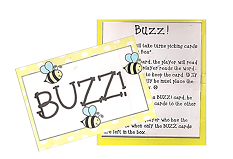
BUZZ!
Create a stack of word cards using either decodable words or Memory Words. For every 10 word cards, add one BUZZ card.
How to Play:
1. Players take turns drawing one card from the stack.
2. If a word card is drawn, the player reads the word aloud. If read correctly, the player keeps the card. If read incorrectly, the card goes to the bottom of the stack.
3. If a BUZZ card is drawn, the player must place all their word cards back under the original stack. The BUZZ card stays out of play.
4. Continue playing until all cards in the stack have been read.
5. The player with the most word cards at the end wins!
|
| |
 |
|
Collect the Bones
Cut out word cards in the shape of bones. Place them in a deck in the center of the group.
1. Have one child roll a number cube.
2. The child draws that number of “bone” cards from the deck. If the child reads a word correctly, they keep that card. If not, they give the card to Golly by placing it in a “missed” pile next to the deck under a Golly figure/ printed image of Golly.
3. The next child repeats the steps—roll, draw, and read.
4. Continue until all cards, including those in the missed pile, have been read and collected.
5. The player with the most “bones” at the end wins!
|
| |
 |
|
Roll and Read
Create a Roll and Read game board for each child in the group using decodable words. For an extra challenge, replace one or two rows with decodable sentences. Place a number cube in the center of the table.
How to Play:
1. Players take turns rolling the number cube.
2. The number rolled determines which row to read from.
3. The player selects one word or sentence from that row and reads it aloud. If read correctly, the player colors over that word or sentence.
4. Continue taking turns until a player has colored all the words or sentences on their board.
5. Play until the first child fills their board.
|
| |
 |
|
Scooping
To prepare for this activity, choose a fluency passage or printed sentences from Superkids text. Draw curved lines under small, meaningful phrases to visually break the text into chunks. Have children read each short phrase rather than the entire sentence at once. This allows them to focus on decoding manageable pieces of text. Ask students to decode each word in the phrase, then reread the phrase smoothly while tracing the curved line underneath.
|
| |
 |
|
Sentence Pyramid
Select a paragraph from Superkids text. Print individual sentences on triangle-shaped cutouts to create sentence pyramids. Start at the top with a single word. On each line below, add one more word until the full sentence is revealed at the base of the pyramid.
Introduce one pyramid at a time and have students read through it repeatedly until they can read it confidently and smoothly. Once all pyramids have been mastered, students can arrange them in order and read the complete passage.
Want to create your own? We’ve got you covered. Download this free sentence pyramid template and use it right away!
|
| |
 |
|
Sentence Progression
Select a sentence from Superkids text or the Daily Routine/Daily Warm-Up. Break the sentence into natural phrases, then print the sentence so each line adds a new phrase until the sentence is complete.
Students read each line in order, adding one phrase at a time. This scaffolded approach helps them gradually increase their reading load while maintaining fluency.
|
| |
 |
|
Chop It
If children struggle with longer passages, try “chopping” the text into smaller, more approachable chunks. Cut printed fluency passages into sections, giving students one small piece to practice each day. After each part has been read multiple times, tape the sections back together and celebrate by reading the entire passage from beginning to end!
|
| |
|
| |
 |
| |
|
|
| |
|
When setting up independent work time activities for fluency practice—whether students are reading a passage or playing a fluency game—it’s important they know exactly how to complete the task. Should they work on their own, with a partner, or as part of a group?
In case you missed it, we’ve created a free set of Independent Activity Station Labels—available for both editions of The Superkids Reading Program! Print, cut, and post them alongside station activities to help students quickly see whether an activity is meant to be completed solo, with a buddy, or a with a team of friends.
|
| |
|
|
| |
|
|
| |
|
 |
|
|
|
|