|
|
|
|
| Issue 73 | October 2026 |
| |
 |
| |
|
|
| |
|
One of the most-asked questions we hear from Superkids teachers: “How do I make sure sure small-group time is valuable and productive for everyone?” It’s an important question, and the answer has two halves that must work together.
On one side is strong small-group instruction—thoughtful grouping, focused time, and the right level of support for each set of readers. On the other side is purposeful independent work—tasks students can complete successfully on their own so you can give your small group your full attention. Get one half right and the other will still wobble, but get both right and your reading block hums.
By October, you’ve likely had enough time to see what’s working, which makes this the perfect month to fine-tune. In this issue, we’ll cover how to structure small-group instruction, how to build independent stations that hold up all year, engagement ideas straight from real Superkids classrooms, a peek at the tools in the new edition that make all of this easier, and a freebie to start using right away in your stations.
|
| |
|
|
|
|
| |
|
|
| |
|
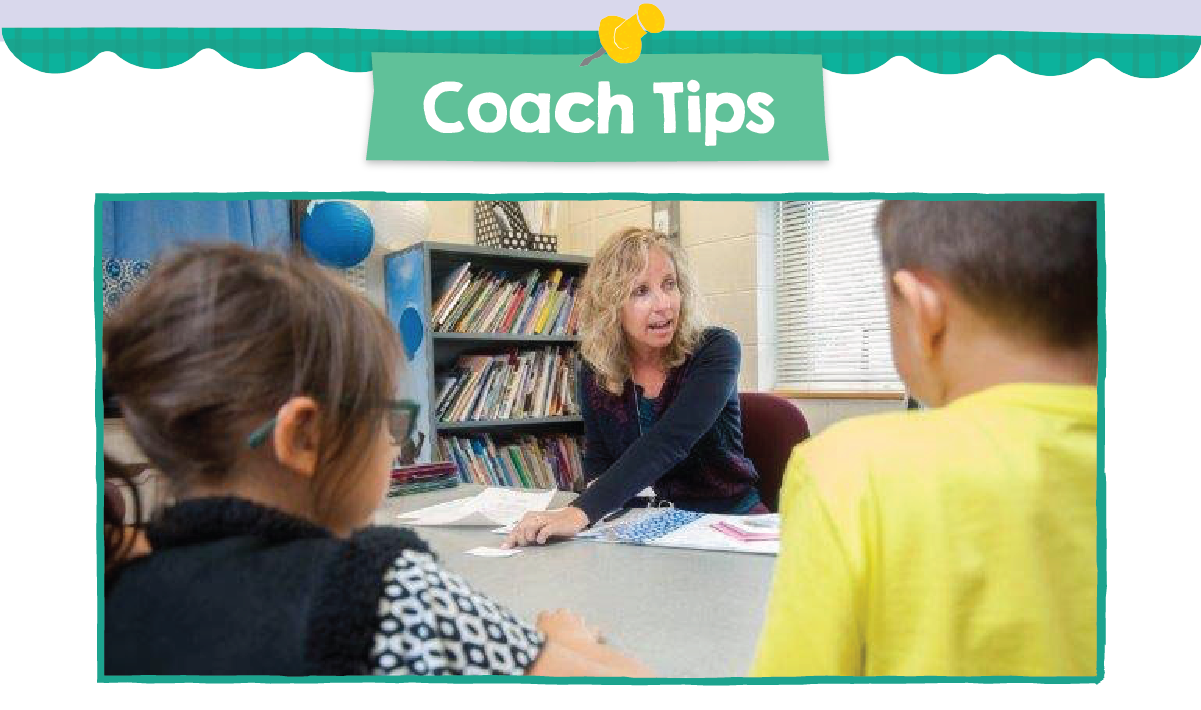
Small-group instruction is a core part of the Superkids reading block, and for good reason: it’s where you can tailor your teaching to what your young readers need right now.
In Superkids, all students read on-grade-level text, so small groups aren’t about giving some students “easier” books. They’re about varying the support around the text—and about protecting time for the targeted skill work some groups need. Here’s how our coaches suggest approaching it.
📊 Start with data, then keep watching.
Use the formal assessments at the beginning of the year to form your initial groups. From there, let informal observation do the steering: performance during the Daily Warm-Ups (Daily Routines in the © 2017 edition), completed Word Work and Practice Pages, oral reading during group time, and written work from independent activities all tell you something useful.
🔄 Keep groups flexible.
Groups formed in August shouldn’t automatically be the same groups you meet with in April—or even in November. Students grow at different rates and in different areas. Plan to revisit groups regularly and move students as their needs shift.
⏱️ Keep group time focused and time-boxed.
Aim for roughly 20 minutes per group, and hold that line. If you’re just beginning to pull groups, start with shorter meetings so you can circulate and coach the rest of the class, then lengthen them as independent routines take hold. Your small group deserves your full attention, which is only possible when everyone else knows exactly what to do.
🪜 Scaffold to the group, not to the class.
A helpful way to think about it: some students need help most of the time, some need help some of the time, and some can handle most tasks independently. For the first group, you might read the text aloud, work through a small section closely, preteach tricky words, and move from choral reading to individual sentences. For the middle group, you may take turns reading aloud with decoding help as needed, and pause to discuss. For the most independent readers, you may let students preview the text before group time, encourage smooth and expressive reading, and add a challenge task.
🎯 Remember that small-group time isn’t always spent reading texts.
Some of your most valuable group time is spent on targeted word work—phonemic awareness, letter-sounds, blending, decoding, encoding, and Memory Words—for the students who need another pass.
📘 A note for users of the new edition: the © 2026 Teacher’s Guides make this planning much simpler, with weekly small-group plans and more differentiated instruction activities built right in. Scroll down to The Inside Scoop for the full story!
Want a planning scaffold? Use the template that matches your edition:
Small-Group Lesson Planner (© 2026 edition)
Small-Group Targeted Skills Planner (© 2026 edition)
Small-Group Lesson Planner (© 2017 edition)
|
| |
|
|
|
|
| |
|
|
| |
|
Independent work time doesn’t become smooth by accident. It runs on deliberate instruction, consistent routines, and a lot of early practice. The weeks you spend teaching procedures now buy you months of uninterrupted small-group time later! Here’s what other Superkids teachers have found works best:
|
|
1.
|
Teach stations the way you teach skills: I Do, We Do, You Do.
Introduce one station at a time. Model it for the whole class, complete it together, and only then release students to do it on their own. When that station is running well, add the next one. Rolling out six stations on the same day is a recipe for six lines of students at your small-group table!
|
|
2.
|
Practice independent work time before you pull your first group.
For the first stretch of the year—or any time independent work starts to unravel—run the whole independent rotation while you stay free to circulate, monitor, and coach. Gather students at the end of each session to debrief: What went well? What was confusing? What will we do differently tomorrow?
|
|
3.
|
Build anchor stations.
One of our favorite ideas from last September’s issue: keep the task at each station the same all year, and refresh only the content. The word-building station is always the word-building station—you simply swap in the current unit’s letter-sounds and word lists. Students already know the routine, so no instructional time is lost to teaching new directions, and refreshing a station takes minutes instead of an afternoon.
|
|
4.
|
Make the plan visible.
Students need to know exactly where to go and what to do. Superkids teachers have shared all kinds of systems that work: assignments written on the board, pocket charts with movable name and station cards, station rotation wheels displayed on a bulletin board or projected digitally, and laminated task checklists that stay the same while the activities inside them change with the unit.
|
|
5.
|
Decide the details in advance.
Where will students work? Will tasks be independent, partner, or group work? Where are the supplies (a tool kit at each station saves a lot of wandering)? What should a student do if they finish early or if they need help while you’re teaching? A visual “I’m teaching a group” cue and an “Ask Three, Then Me” rule are two of the simplest fixes for reducing interruptions.
|
|
6.
|
Give your stations a Superkids face.
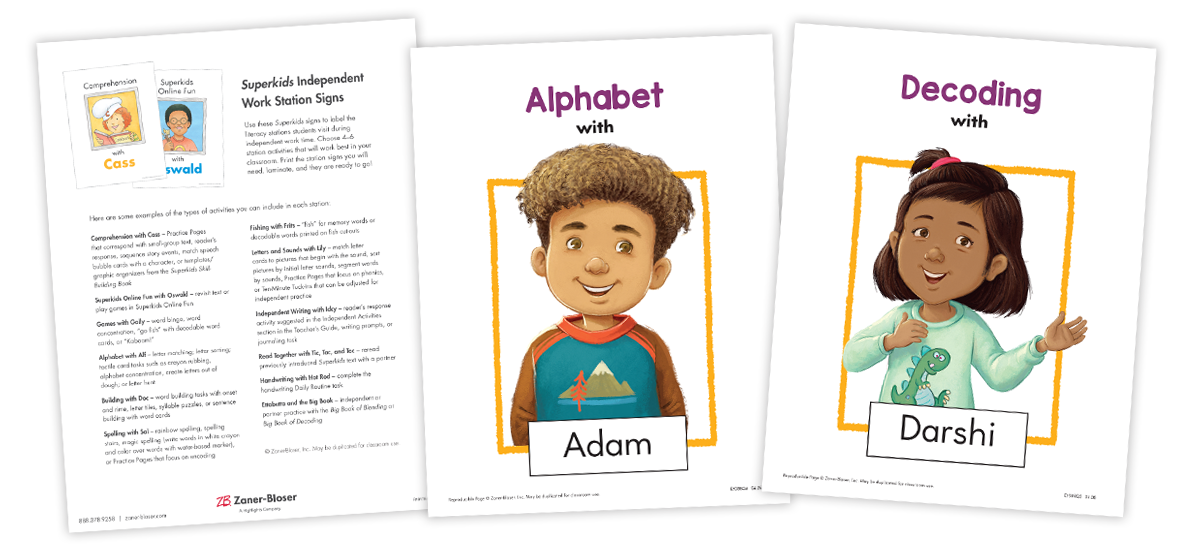
Many teachers label each station with a Superkids character so students can identify their station at a glance. It’s a small touch that makes independent time feel like part of the Superkids world. This month’s freebie makes it easy, no matter which edition you teach. 👇
|
| |
|
|
|
|
| |
|
|
| |
|
The goal of independent work isn’t just to keep students busy. They should be purposefully busy, with tasks that reinforce what they’re learning and that they can complete successfully on their own. Here are a few teacher-tested favorites we’ve gathered from Superkids classrooms.
|
| |
 |
|
🎣 Something’s Fishy!
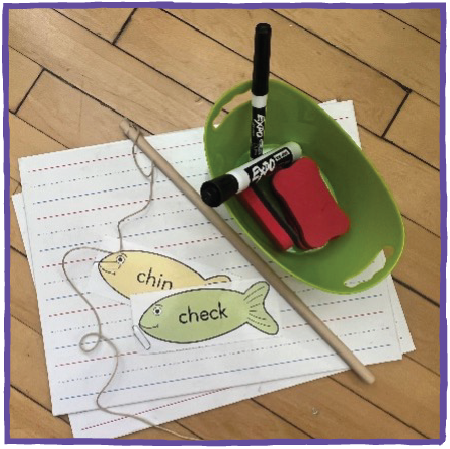
Print decodable words or Memory Words on paper fish, laminate them, and attach a paper clip to each one. Students “catch” a fish with a magnet on a string, read the word aloud, write it down, and release it back into the pond. To keep it current, swap the fish at the start of each unit.
|
| |
 |
|
🧰 “Lit Kits” for Word Building
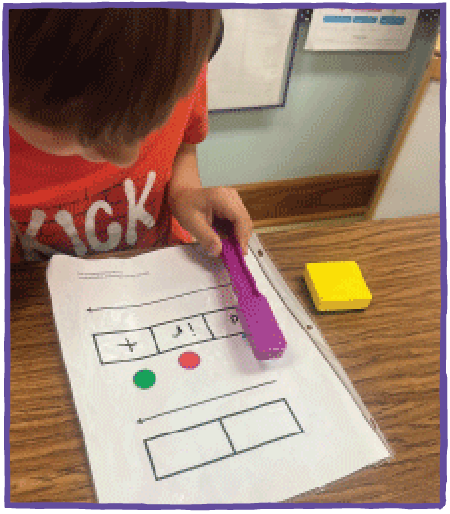
First-grade teacher Christa Kelly of Cresaptown Elementary School in Cresaptown, Maryland, gives each student a zipper bag holding a laminated sound-box mat, a dry erase marker, an eraser, a magnetic wand, and magnetic chips. Everything a student needs for word building travels with them—and setup for the next unit is just a new word list!
|
| |
 |
|
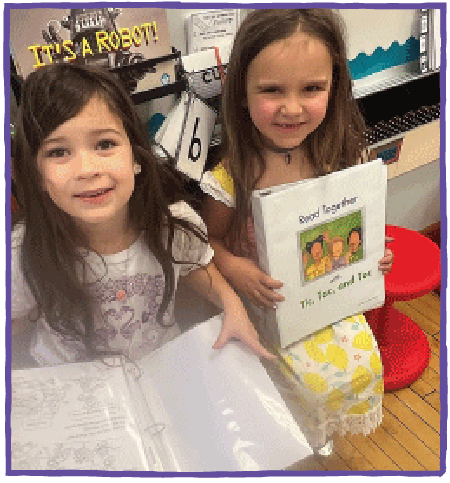
📖 Fluency Binders for Partner Reading
Christa also keeps a set of “Read Together” binders at her partner-reading station. Each time a new fluency passage is introduced, copies go into plastic sleeves and into the binders, so students always have familiar text to reread with a partner.
|
| |
 |
|
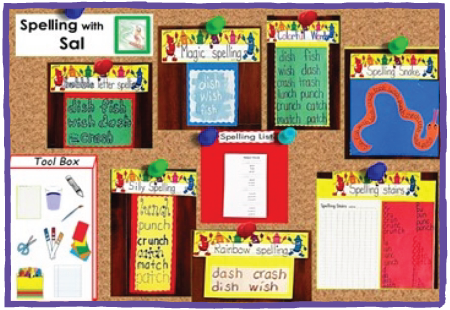
✏️ A Spelling Station that Grows
One Superkids teacher keeps her spelling station in place all year and introduces just one activity at a time—magic spelling first, then another activity a few weeks later, and so on. By midyear, students have a menu of ways to practice, and the only thing she changes each week is the word list.
|
| |
 |
|
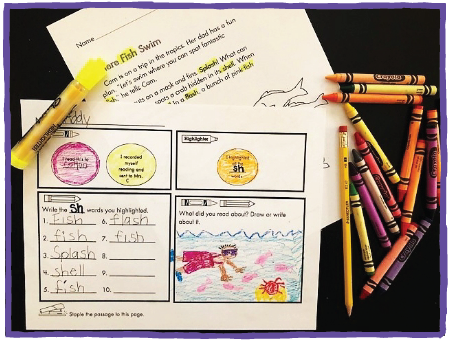
🔍 Phoneme Hunt with a Fluency Passage
At this station, students read the current fluency passage twice, highlight every word containing the target phoneme, and then illustrate what they read. It’s reading practice, phonics review, and comprehension all in one task—and it’s refreshed by simply swapping the passage.
|
| |
|
|
✨ Coach tip: Always check the written work students complete independently and give corrective feedback. Without it, the mistakes students make can quietly become habits. Checking their work also tells students that what they do at a station matters, which is exactly the message you want to send during the time you’re not standing beside them!
|
| |
|
|

• An insider look at the enhancements made to the new edition of Superkids •
|
 |
| |
|
|
| |
|
|
| |
|
Small-group instruction continues to play an important role in the new edition of Superkids. You have multiple opportunities each week to work with students in smaller groups during the Reading strand. Small-group time may involve all groups reading the same text with varying levels of teacher support or each group reading a differentiated text that matches the group's instructional needs. Small groups may also focus on targeted word work and skill practice instead of text reading.
The Right Support at the Right Time
Teachers who loved the Ten-Minute Tuck-Ins in the © 2017 edition will feel right at home with the new Differentiated Instruction Activities in the back of each Teacher's Guide. Like the Tuck-Ins, these ready-to-use lessons provide practice in the skills students need most and are organized into More Support, On-Level Support, and More Challenge categories. Whether students need additional reinforcement, grade-level practice, or an extra challenge, you can quickly find meaningful activities that meet learners where they are and help them continue to grow.
Flexibility Built In
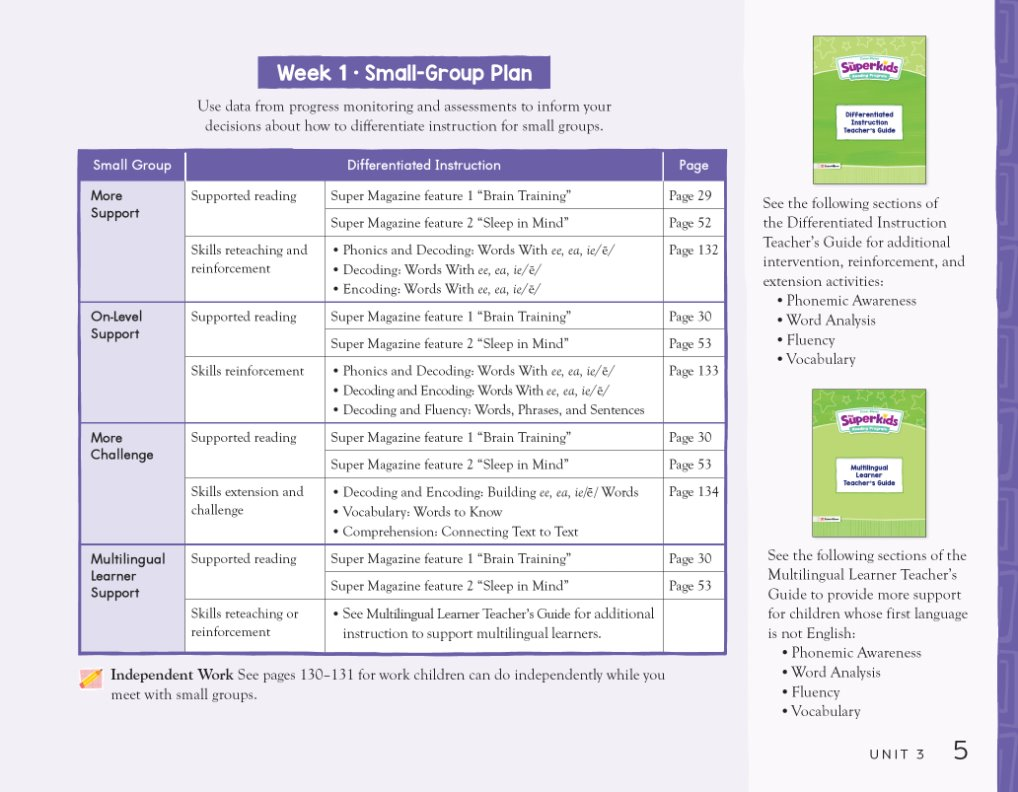
Each unit includes dedicated days when small-group instruction focuses specifically on text reading. Other days offer Flexible Options, which allow you to make instructional decisions based on student needs. Some small groups may benefit from additional text reading, while others may need focused skill work using the Differentiated Instruction Activities in the back of the Teacher's Guides. Teachers can choose the best fit for each of their small groups. Schools that have purchased the Differentiated Resources Kit can also draw from the Differentiated Instruction and Multilingual Learner Teacher's Guides. To help support you in your planning for small groups, the Teacher’s Guides include weekly Small-Group Plans that highlight the options for differentiated instruction (see this example). With built-in structure and plenty of flexibility, you’re equipped with the tools you need to make every small-group lesson count.
|
| |
| |
|
|
|
|
| |
|
|
| |
|
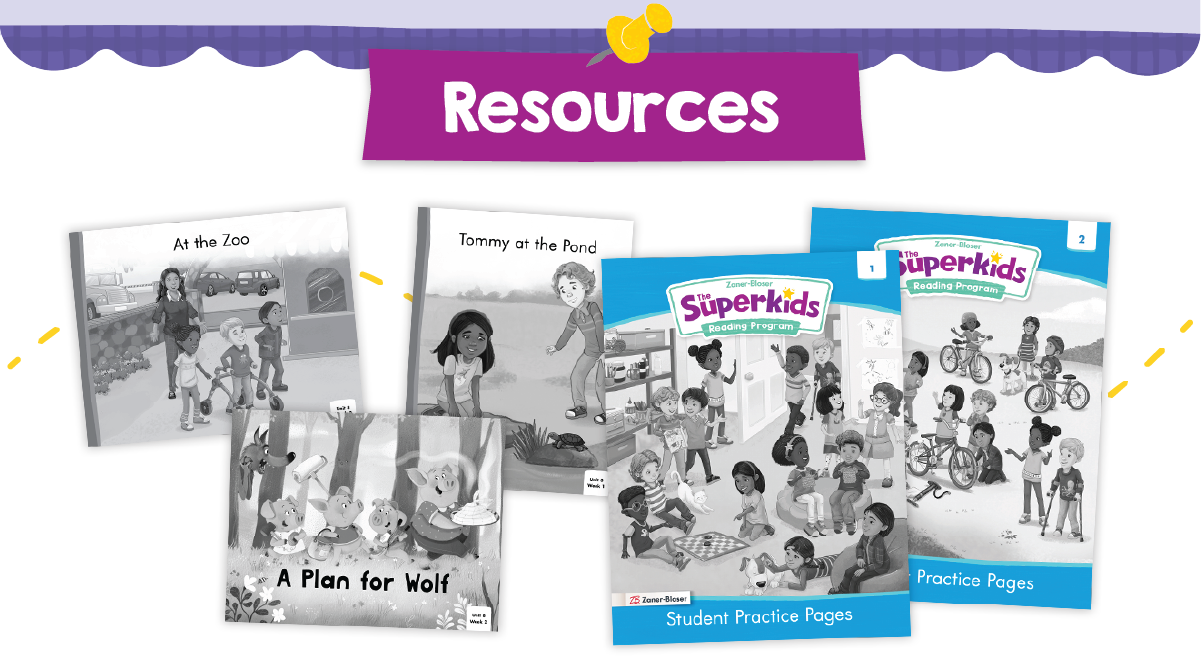
Strong small groups and purposeful independent work have something in common: both depend on having the right materials in students’ hands. Two components, new for the © 2026 edition this year, make that easier.
📚 Practice Decodable Libraries
These black-and-white, fully decodable books give students additional reading practice with the letter-sounds and patterns they’ve already learned. They’re a natural extension of the differentiated reading groups: a group can reread a title with a partner at a station, take one home, or use it for repeated reading to build fluency and confidence, all without adding prep to your week. Each library contains new titles separate from the Decodable Libraries already included in the program instruction.
📄 Student Practice Pages
Giving each student their own bound set of Practice Pages saves you copying time, keeps each student’s work in one place, and makes their progress easier to track. Because the pages are self-contained and follow the skills of the unit, students can pick up their books and complete pages independently while you work with a small group.
Contact Sales to order these resources or learn more!
|
| |
|
|
|
|
| |
|
|
| |
|
These free, printable Character Station Activities pair Superkids characters with low-prep literacy tasks you can drop straight into your stations: Alphabet with Adam (a Letter Critter activity), Decoding with Darshi (Decode to the Top), Name the Word with Nina (a partner segmenting and blending game), and Onsets and Rimes with Oliver (Onset-Rime Machine). Each one includes a printable character sign for your station, a materials list, step-by-step directions, and the reproducible pieces you’ll need. These are exactly the kind of tasks described above: the routine stays the same all year, and you refresh the content—letters, words, onsets and rimes—to match your current unit. Teach it once, use it for months!
|
| |
|
|
| |
|
Teaching the © 2017 edition? Our original Superkids Independent Work Station Signs feature the © 2017 cast with a suggested list of activities for each station.
|
| |
|
Have an idea for this newsletter?
We’d love to share your tips, activities, and
inspiration with other Superkids teachers!
|
|
|
|
| |

|
| CR0076C |
|
|
|