|
|
|
|
| Issue 72 | September 2026 |
| |
 |
| |
|
|
| |
|
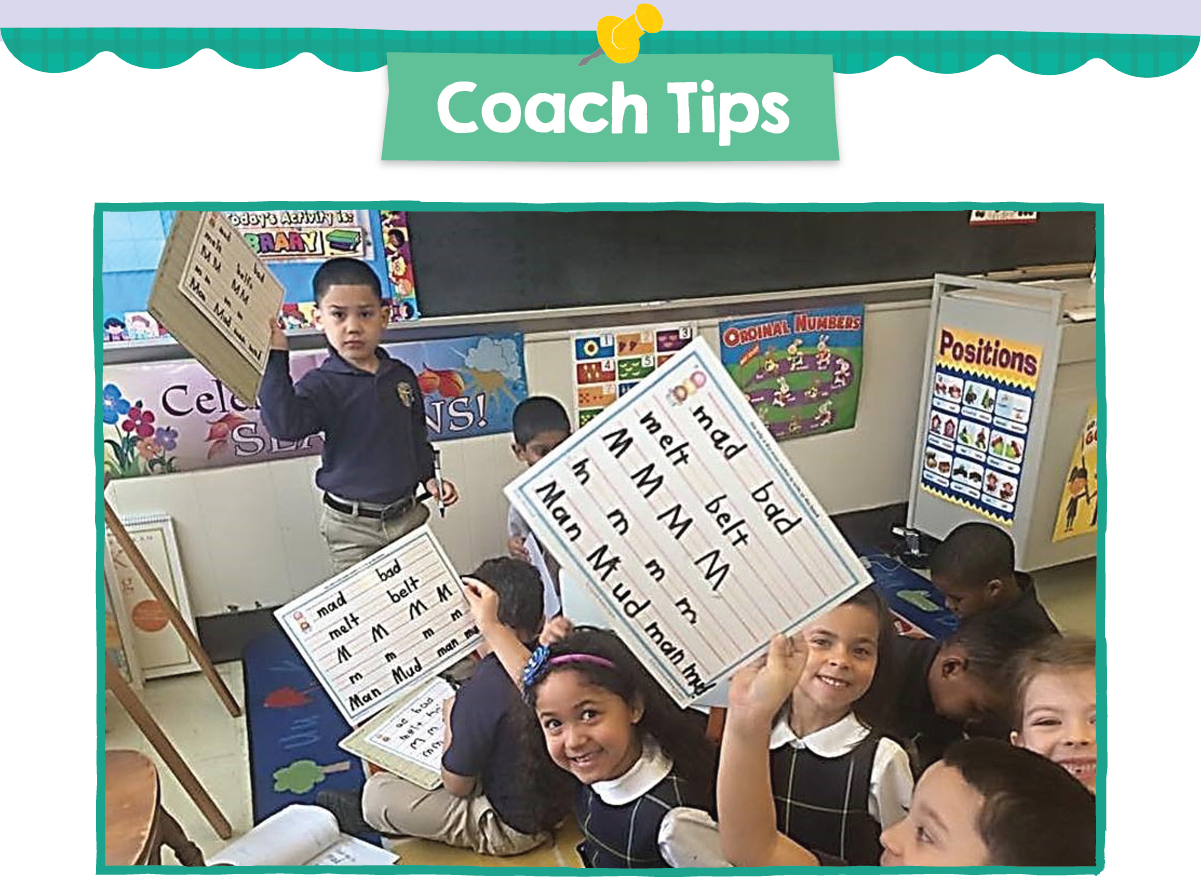
Ask some veteran Superkids teachers for advice and you’re likely to hear one thing repeatedly: don’t skip the Daily Warm-Ups!
If you’re teaching the © 2017 edition, you’re familiar with these as Daily Routines. The Daily Warm-Ups in the © 2026 edition have a different name, but the same big idea—so wherever you see one term in this issue, know that the tips apply to both. Whether you’re teaching Daily Routines or Daily Warm-Ups, these few minutes at the start of each lesson do a remarkable amount of heavy lifting: they settle students into the work, reinforce skills they’ve already learned, and give you a daily informal assessment opportunity to observe how each student is doing.
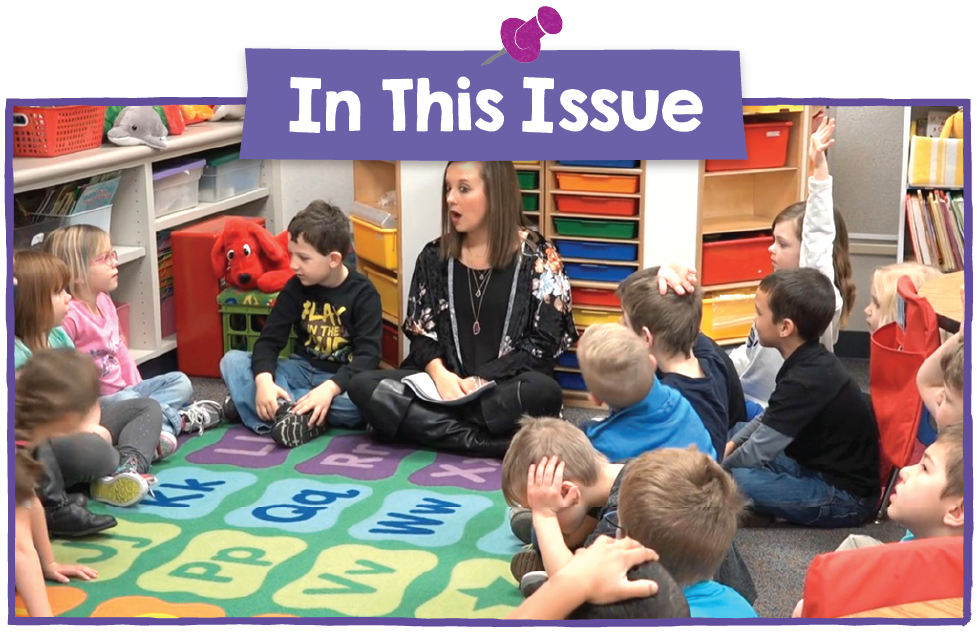
September is the perfect month to get them dialed in. In this issue, we’re covering what the warm-ups are built to do, some common pitfalls to avoid, how to use what you observe, and a few ideas for keeping the energy high all year long.
|
| |
|
|
|
|
| |
|
|
| |
|
Daily Warm-Ups are short, repeated, high-energy whole-group practice sessions of foundational skills. They're brisk by design: quick rounds of letter-sounds, blending and decoding, phonemic awareness, letter formation, Memory Words, and fluency practice that get every student participating in the lesson right from the start.
Here's why that quick, repeated practice is so important:
⭐ Practice distributed across many days builds automaticity. Skills revisited a little bit every day become effortless in a way that one long session can't match.
⭐ Automaticity frees up brainpower for meaning. When decoding no longer takes conscious effort, students have working memory to spend on comprehension. When handwriting becomes automatic, students can spend more energy on writing and less on letter formation.
⭐ Early consistency sets the pace for the year. The habits you establish in September are the habits that carry you through May or June.
⭐ Everybody practices, and you get to watch. Because Daily Warm-Ups are whole-group, every student is doing the work—and you get a daily, low-stakes look at who's got it and who needs a hand.
Steer Clear of These Common Pitfalls
Even seasoned teachers can occasionally slip into these! Here’s what to watch for:
🚩 Skipping them when time is tight. When the schedule gets squeezed, the Daily Warm-Up is the first thing that looks skippable. It isn't. This is the piece that gets students’ brains ready to learn—you’ll often spend the time you made up cutting the Warm-Up on other portions later in the lesson.
🚩 Turning a warm-up into a workout. As our Superkids trainers like to say, the Daily Warm-Ups are a warm-up, not a workout. This isn't the moment for a full lesson or reteaching. If a skill looks shaky, make a note and come back to it—don't stop the whole group to fix it now.
🚩 Letting them stretch past their time. Warm-ups should stay brisk, not creep into the instruction that follows. Set a timer for 10 minutes as you begin, and when it goes off, move on. It may feel ruthless the first few times, but it will feel completely normal by week three.
Focus on Informal Assessment
The Daily Warm-Ups aren't just practice—they're one of the best informal assessment tools you have. In a few minutes, you get a quick read on who's secure and who needs follow-up.
The key is to keep it to observation, not correction. You're gathering information, not fixing errors on the spot. So, what do you do with what you notice?
⭐ Form flexible small groups based on what you're actually seeing that week, not what you observed at the beginning of the year.
⭐ Plan targeted support with your Differentiated Instruction Kit for the students who need another pass at a specific skill.
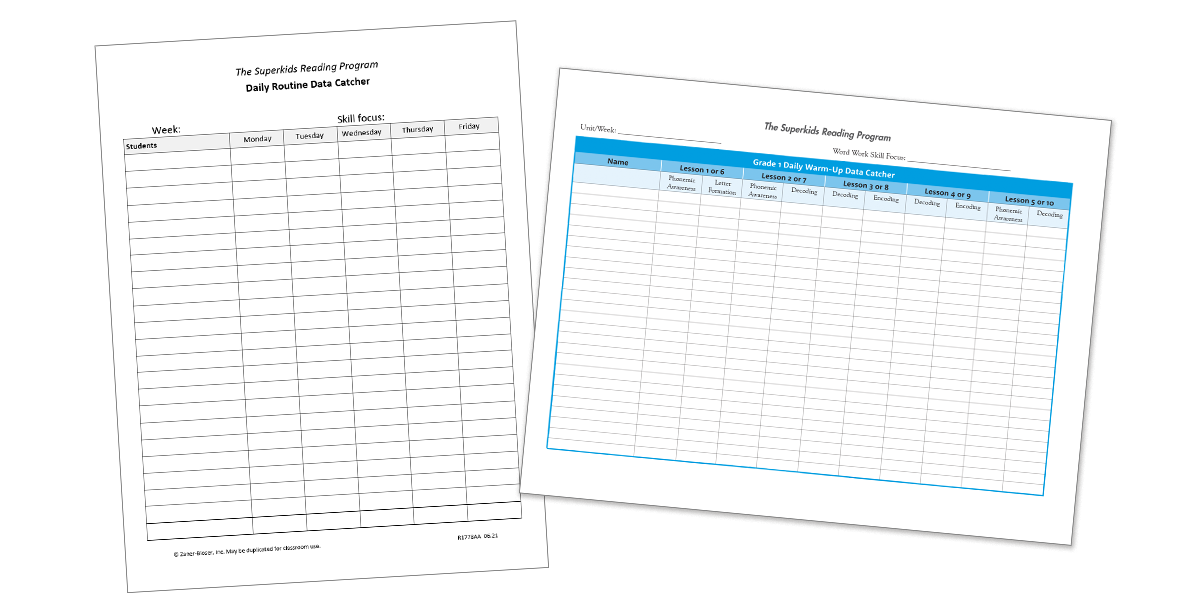
⭐ Keep it manageable. Documenting every student every day is a fast track to burnout. Our coaches suggest dividing your class into four or five sections and focusing your documentation on just one section each day. By the end of the week, you've captured everyone while skipping the overwhelm.
Need a simple way to capture what you're seeing? Scroll down to this month's freebie. 👇
|
| |
|
|
|
|
| |
|
|
| |
|
The structure of your Daily Warm-Ups should stay consistent (that's what makes them work). The energy is what you refresh. Here are five ways to keep students leaning in throughout the school year.
|
| |
 |
|
1. Get Moving
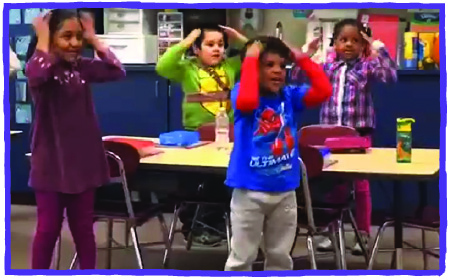
Pair your call-and-response with movement. Have students clap, tap, stomp, or air-write as they respond. The motion keeps bodies engaged, gives wiggly kiddos an outlet, and adds one more pathway to the skill.
|
| |
 |
|
2. Pass the Pointer
Rotate student leaders. Let a different child lead the letter-sound round each day—pointer and all. Students may pay closer attention when one of their peers is running the show, and the job itself is a badge of honor.
|
| |
 |
|
3. Buddy Up
Work in a quick partner check-in. Have students turn and share a word, check each other's spelling, or blend a word together before completing the rest of the Daily Warm-Up with the whole group. Partnered check-ins are a great way to encourage a bit of independence and interactivity while keeping students engaged.
|
| |
 |
|
4. Make It a Game
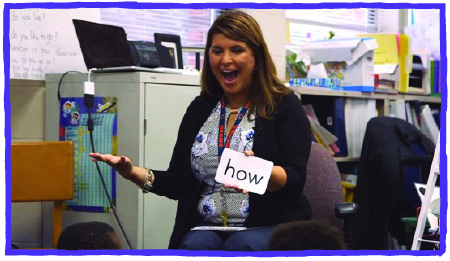
A little friendly gamification goes a long way! Try beating yesterday's count, "stumping the teacher," or running a quick round where the class tries to get through the whole set without a stumble. Keep it light and keep it short.
|
| |
 |
|
5. Celebrate the Streak
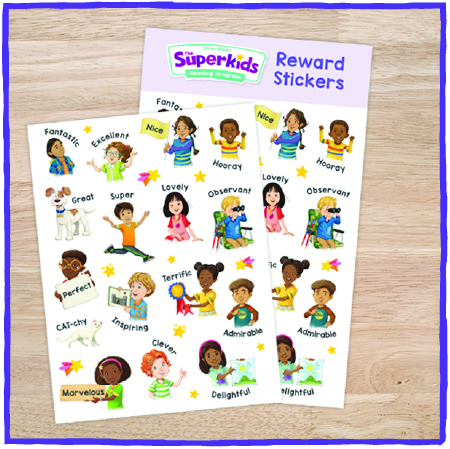
Track your class's winning streaks and celebrate them. Five times in a row of a perfect Memory Word round? That's worth a cheer! Kids love a streak—and it makes the consistency itself feel like the achievement. Keeping some extra Superkids stickers, pencils, or other prizes on hand to distribute for achieving long streaks provides an extra touch of motivation.
|
| |
 |
|
6. Pull Up the Portal
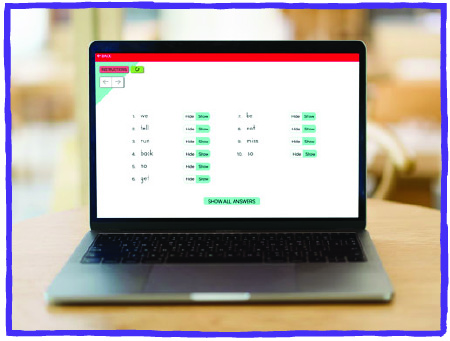
Consider using the interactive Daily Warm-Ups in MyZBPortal.com. These time-savers are linked on the Lesson Page for each Superkids lesson and can be projected onto an interactive whiteboard. Getting students up and out of their seats to interact with the Daily Warm-Up provides an energy boost!
|
| |
|
|
|

• An insider look at the enhancements made to the new edition of Superkids •
|
| |
|
|
| |
|
|
| |
|
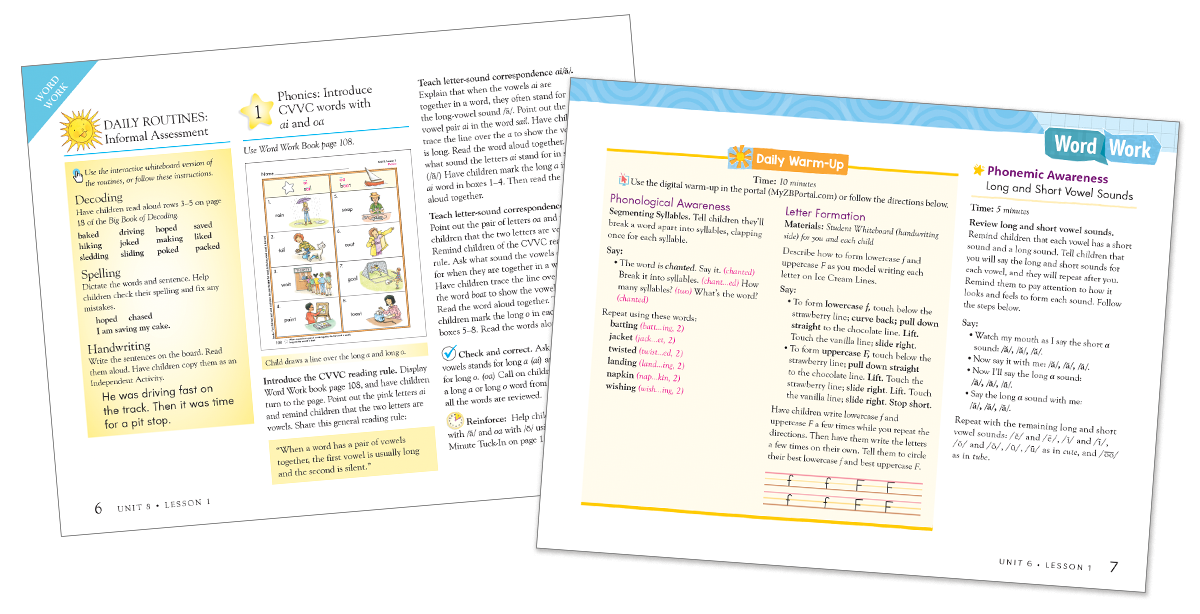
Just like the Daily Routines in the © 2017 edition, the new Daily Warm-Ups are designed to help students review and practice important skills every day. These brief activities provide distributed practice and serve as an informal assessment, giving you a quick window into which skills students have mastered and which may need a little more attention. While the name has changed, the goal remains the same: help students start the lesson ready to learn while giving teachers valuable information to guide instruction.
⏱️ Less Time, More Impact
One of the biggest updates in the new edition is a streamlined format that makes Daily Warm-Ups easier than ever to fit into the school day. In grades 1 and 2, there are now just two routines per day, designed to be completed in 10 minutes or less. Kindergarten follows a slightly different model, with most days including a third routine focused on communication, oral language development, or print concepts. These routines are especially prevalent early in the kindergarten year when these foundational skills are growing rapidly. Another exciting change is that most of the activities from The Superkids Phonemic Awareness program are now built directly into the Daily Warm-Ups instead of being taught separately! Not only does this save time, but it also creates an even more efficient, connected learning experience.
🗓️ Predictable by Design
You will also notice more consistency from unit to unit. The Daily Warm-Ups follow a predictable pattern, so you’ll know which routines to expect on which days. That means less time spent prepping and more time focused on instruction. Students benefit, too, as familiar routines help them jump right in and focus on the learning. It's a small change that makes a big impact, creating a Daily Warm-Up experience that is efficient, organized, and easy to implement. For an at-a-glance look at how the routines play out across units, be sure to check out the Daily Warm-Up Unit Plan in your Program Guide.
|
| |
| |
|
|
|
|
| |
|
|
| |
|
Capturing what you notice shouldn't be one more thing to manage. These printable Data Catchers give you a simple, consistent place to jot down observations while the Daily Warm-Ups are happening, so your notes are ready when it's time to form small groups or plan support.
|
| |
|
|
| |
|
|
| |
|
Have an idea for this newsletter?
We’d love to share your tips, activities, and
inspiration with other Superkids teachers!
|
|
|
|
| |

|
| CR0076B |
|
|
|