

Understanding Reading Motivation and How It Shapes Literacy Outcomes
In this white paper, Dr. Molly Ness explores how reading motivation fuels academic achievement and the development of foundational reading skills at a time when reading for pleasure has decreased.
Download as a PDF
A ubiquitous question—posed by teachers, librarians, school leaders, and parents alike—is, “How can I encourage children to read more?” Conversations about reading motivation have increased at a time when reading for pleasure has decreased: A recent finding from the National Literacy Trust showed that only 32.7% of children and young people ages 8–18 said they enjoyed reading in their free time in 2025, the lowest level recorded in the organization’s 20 years of tracking reading attitudes (Clark, 2025). Though the decline of reading is the focus of recent headlines, reading motivation has been an ongoing global concern. Data from 2010 from 64 countries participating in the Program for International Student Assessment (PISA) indicated that 37% of students reported that they do not read for enjoyment at all (Organisation for Economic Co-operation and Development, 2010).
Defining Reading Motivation
Inherent in conversations about reading for pleasure and reading attitudes is the role of reading motivation. Reading motivation is defined as “the drive to read resulting from an individual's beliefs about, attitudes toward, and goals for reading” (Conradi, Jang, & McKenna, 2014, p. 154). Others situate motivation within the framework of engagement; Linda Gambrell defines motivation as the likelihood of engaging in reading or choosing to read (Gambrell, 2009, 2011). This perspective articulates the differences between engaged and disengaged readers, with engaged readers being intrinsically motivated to “read for a variety of personal goals, [to be] strategic in their reading behaviors, knowledgeable in their construction of new understandings from text, and socially interactive about the reading of text” (Gambrell, 2011, p. 173).
Motivation is often described as either intrinsic or extrinsic: intrinsic motivation being internal reasons for reading versus extrinsic being external reasons. Intrinsic motivation might compel a child to read simply because they enjoy it, versus extrinsic motivation being because an adult compelled them to or to earn points towards a prize. Despite creative and well-intentioned efforts using extrinsic reading incentives, research affirms that intrinsic reading motivation is associated with more frequent and engaged reading and better reading skill (Schiefele et al., 2012; Troyer et al., 2019).

Who Are Motivated Readers?
Logically, research highlights the following takeaways about motivated readers:
- Motivated readers spend more time reading than those who are not motivated (Guthrie, Wigfield, Metsala, & Cox, 1999; Morrow, 1992; Wigfield & Guthrie, 1997).
- Motivated readers are better readers and comprehenders than children who spend little time reading, as demonstrated by higher levels of achievement and better performance on standardized tests of reading (Cunningham & Stanovich, 1997; Guthrie, Schafer, & Huang, 2001; Petscher, 2010; Sweet, Guthrie, & Ng, 1998; Toste et al. 2020).
- Motivated readers are more likely to develop into lifelong readers (Morrow, 1992; Wang & Guthrie, 2004).
- Research from Guthrie, Schafer, and Huang (2001) suggests that reading engagement is potentially more important than students’ family background; students with high reading engagement but lower parental education and income had higher reading achievement than students with lower reading engagement and the same background characteristics.
In a 2010 study, Anthony and Mary Applegate set out to better understand reading motivation for two groups of students: (1) those who could recall what they read and who demonstrated the inclination to think deeply about it and (2) those who could recall what they read but who did not demonstrate the inclination to respond thoughtfully to the text. They sought to understand whether these two groups would differ with respect to their overall motivation to read, the value that they ascribed to reading, and their perceived self-efficacy as readers. Not surprisingly, children with high inclination to respond thoughtfully to text were significantly more motivated to read than children who excelled only in text-based comprehension. These findings suggest that motivation is deeply connected to reflective reading and students’ values of themselves as readers.
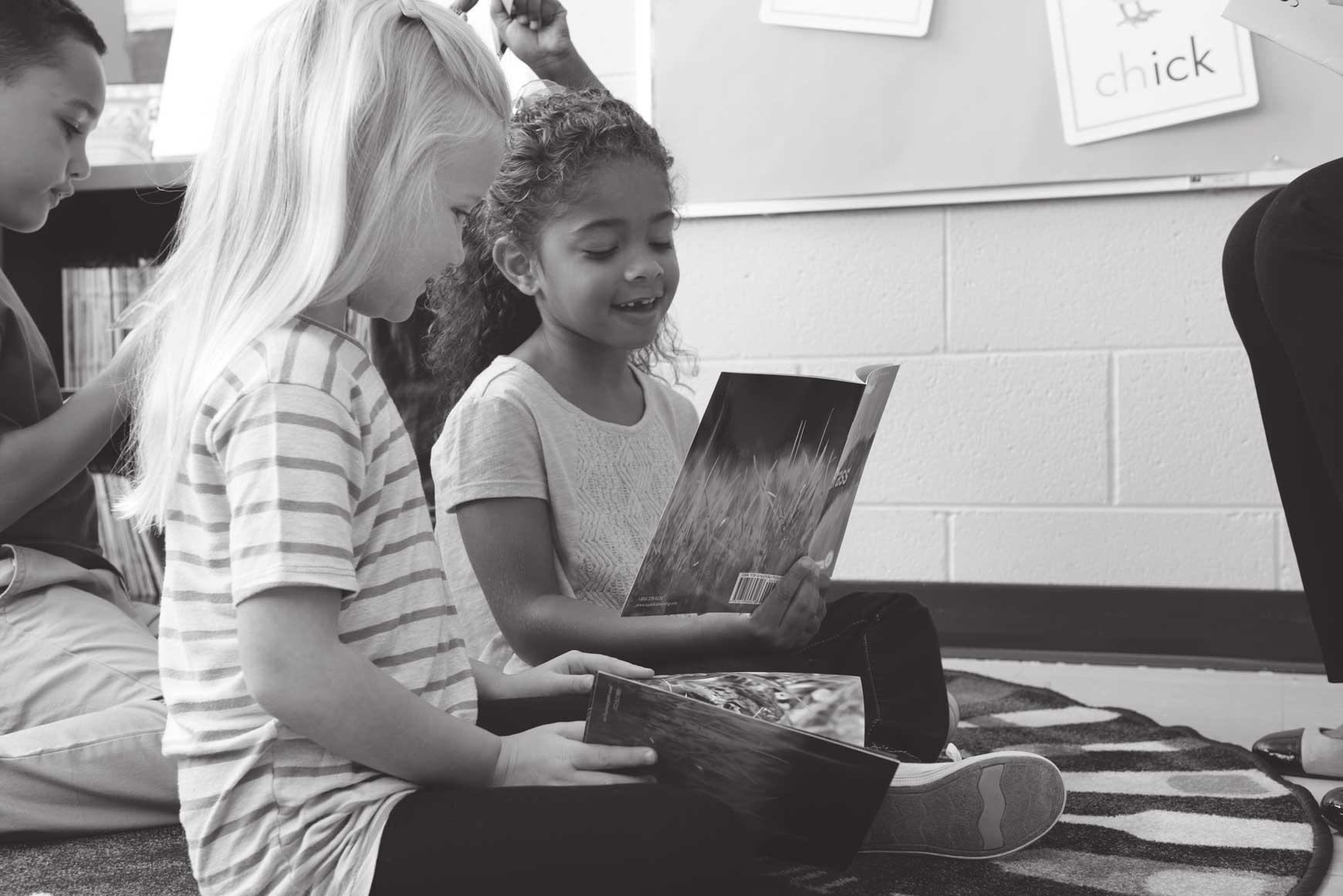
Reading researchers and thought leaders in the area of motivation John Guthrie and Allan Wigfield (2000) note that children experience the greatest decline in motivation to read from first through fourth grades. They posit that this decline is likely attributed to students’ growing awareness of their reading performances and/or struggles, as well as instruction that is disconnected from children’s authentic interests.
The Role of Self-Efficacy in Reading Motivation
Motivation is influenced by children’s perceptions of themselves as readers and their attitudes about the usefulness and importance of reading. The reading research on motivation borrows heavily from the expectancy-value theory (Eccles, 1983), suggesting that motivation is dependent on two key factors: 1. The extent to which an individual expects success or failure in a task 2. The value and importance of that task Introduced in 1986 by Bandura, self-efficacy theory is one’s personal beliefs about what they are capable of learning or doing. When related to reading, self-efficacy is defined as a “reader’s perceptions of competence in their ability to successfully complete reading tasks” (Unrau et al., 2018, p. 186). We cannot overlook the importance of self-efficacy on literacy achievement and motivation; students who are confident that they can succeed at reading new and challenging texts are more persistent, voracious, and successful readers (Unrau et al., 2018). Fortunately, self-efficacy is not fixed; students’ sense of themselves as readers changes over time, through effective instruction and even well-designed self-efficacy interventions. A 2020 meta-analysis revealed that when children have success with reading, they undergo an increased desire to engage in literacy acts (Toste et al., 2020).
We cannot overlook the importance of self-efficacy on literacy achievement and motivation; students who are confident that they can succeed at reading new and challenging texts are more persistent, voracious, and successful readers (Unrau et al., 2018).
What Motivates Children to Read
Naturally, literacy advocates and researchers search for ways to motivate children to read. In their 2006 article, researchers Kathryn Edmunds and Kathryn Bauserman went straight to the source: interviewing elementary school children about what they like to read. Their findings are summarized below:
- Children are motivated to read books based on their personal interests.
- Children select books with appealing covers, action-packed plots, and humor.
- They are eager to share knowledge gained from reading informational books.
- School librarians, teachers, and parents highly influence children’s book selections.
A survey of nearly 3,000 children in the Scholastic 2019 Kids & Family Reading Report found the following:
40% want books that allow them to explore places and worlds they have never been.
26% want books about topics they want to become familiar with.
25% want books that help them imagine and understand other people’s lives.
25% want books that make them think and feel.
23% want books that help them forget about real life for a while.
22% want books that inspire them to do something good.
19% want books that are about things they are experiencing.

How to Improve Reading Motivation: The Role of Choice
A substantial body of research reveals the essential role of choice in motivating children to read. Choice empowers individuals with autonomy and self-control, thus improving their ability to do better at, enjoy, and persist at activities involving choice (Deci, Koestner, & Ryan, 2001; Ryan & Deci, 2019).
Specific to literacy, when students can select what they read, the outcome is increased intrinsic motivation to read and comprehension (McClung et al., 2019).
In the specific context of reading, Reynolds and Symons (2001) found that when students could choose what they wanted to read, their motivation to read what they selected also increased. In a randomized experiment, Reynolds and Symons compared two groups of third-grade children: 42 students in the treatment condition were given a choice of three books to read, and 42 students in the comparison condition were assigned to read one of the three books. Findings indicated that students in the choice condition were more motivated to find the answers to reading-comprehension questions
Aiming to improve reading engagement and motivation in the United Kingdom, the National Literacy Trust (Clark, 2025) began public campaigns around the benefits of reading and building reading engagement. They released the following findings:
- 2 in 5 children and young people were motivated to read when material related to a favorite film or TV series (38.1%) or matched their interests or hobbies (37.1%).
- 3 in 10 (30.9%) were drawn in by an interesting book cover or title.
- 1 in 4 (26.6%) valued having the freedom to choose what they read.
How to Improve Reading Motivation: Seeing Yourself Reflected in Text
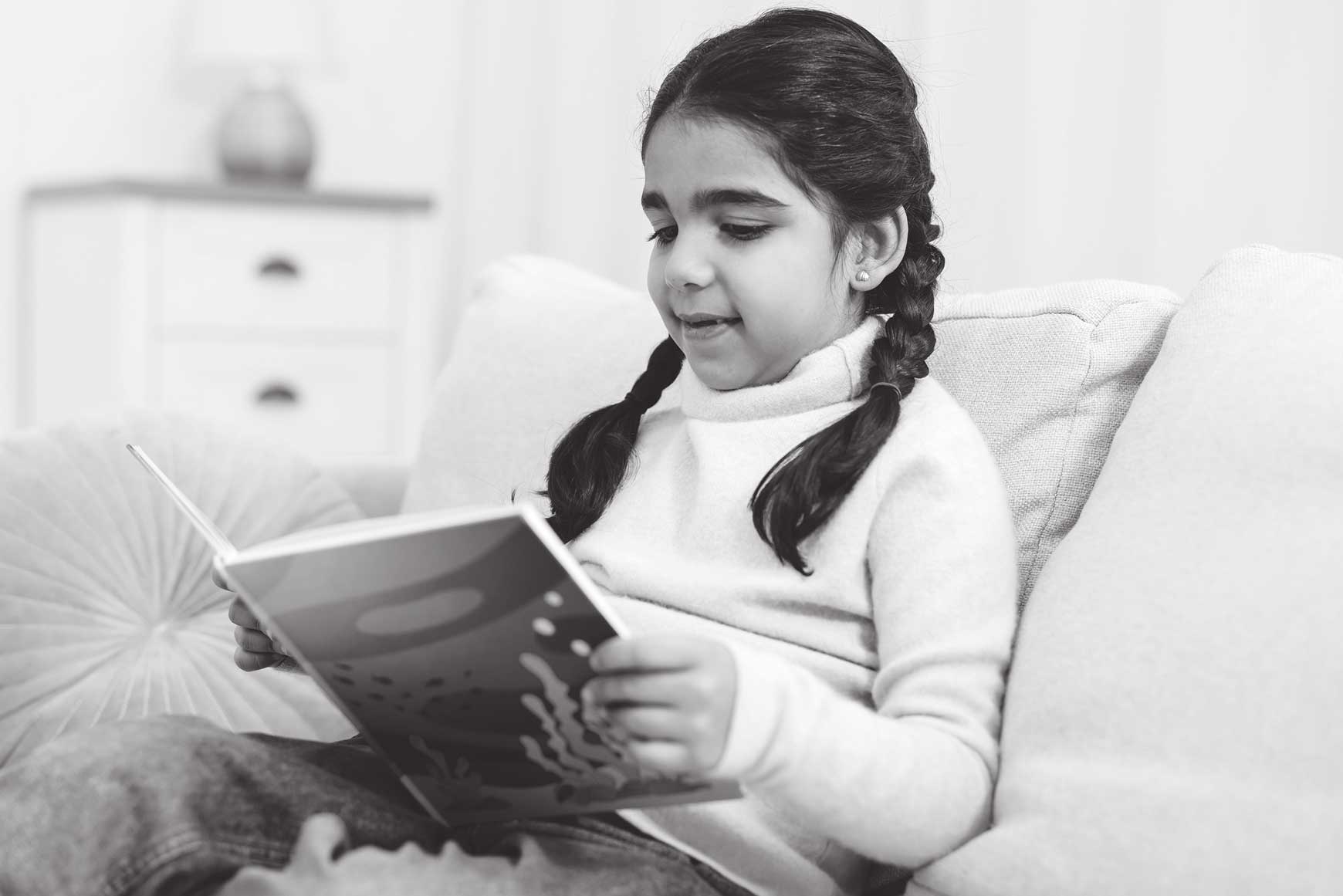
Various types of text also bolster students’ reading motivation, with engaging characters being of high appeal to children. When children can relate to characters in fiction text, they create personal connections to deepen engagement and positive associations with reading (Kucirkova et al., 2014, 2017; McGeown et al., 2015). Literacy thought leader Rudine Sims Bishop (1990) posited that books should serve as windows, mirrors, and sliding glass doors: mirrors to reflect readers own lives, cultures, identities, and experiences; windows to looks into the lives and experiences of others different than themselves; and sliding glass doors to allow readers to imaginatively experience a different world. Through reading texts of all three varieties, readers develop positive senses of self, understanding and empathy of others, and broader worldviews expanding their experiences. Further, children’s reading engagement, motivation, and self-efficacy strengthen through books offering windows, mirrors, and sliding glass doors.
“Literature transforms human experience and reflects it back to us, and in that reflection, we can see our own lives and experiences as part of the larger human experience. Reading, then, becomes a means for self-affirmation, and readers often seek their mirrors in books.”
—Sims Bishop, 1990
Final Thoughts
As our nation collectively addresses stagnation in our students’ foundational reading skills, we cannot afford to overlook an essential element in reading development: the role of engagement and motivation. Not only should schools build students’ reading skills, but so too should they address children’s self-efficacy as readers, desire to read from rich and diverse text, and a passion for lifelong reading. Through authentic texts that are engaging and reflective, students experience success as readers, thus fueling the motivation to read. Positive early literacy experiences—through both high-interest text and effective reading instruction—set children on a path to self-efficacy and engaged reading.
About the Author

She has extensive experience in reading clinics, consulting with school districts, leading professional development, and advising school systems on research-based reading instruction. Dr. Ness provides literacy leadership for nationally recognized literacy nonprofits, as well as major educational publishers. She is the founder of Dirigo Literacy, a literacy consulting firm.
When she is not reading and writing about reading and writing, Dr. Ness is driving her ice-hockey obsessed teenage daughter to the rink, learning how to fly fish, or hiking with her poorly behaved goldendoodle.
References
Applegate, A. J., & Applegate, M. D. (2010). A study of thoughtful literacy and the motivation to read. The Reading Teacher, 64(4), 226–234. https://doi.org/10.1598/RT.64.4.1
Bandura, A. (1986). Social foundations of thought and action: A social cognitive theory. Prentice-Hall.
Bishop, R. S. (1990). Mirrors, windows, and sliding glass doors. Perspectives: Choosing and Using Books for the Classroom, 6(3), ix–xi.
Clark, C. (2025). Children and young people’s reading in 2025. National Literacy Trust.
Conradi, K., Jang, B., & Mckenna, M. (2014). Motivation terminology in reading research: A conceptual review. Educational Psychology Review, 26, 127–164. https://doi.org/10.1007/s10648-013-9245-z
Cunningham, A. E., & Stanovich, K. E. (1997). Early reading acquisition and its relation to reading experience and ability 10 years later. Developmental Psychology, 33(6), 934–945. https://doi.org/10.1037/0012-1649.33.6.934
Deci, E. L., Koestner, R., & Ryan, R. M. (2001). Extrinsic rewards and intrinsic motivation in education: Reconsidered once again. Review of Educational Research, 71(1), 1–27. https://doi.org/10.3102/00346543071001001
Eccles, J. (1983). Expectancies, values, and academic behaviors. In J. T. Spence (Ed.), Achievement and achievement motives: Psychological and sociological approaches (pp. 75–146). W. H. Freeman.
Edmunds, K. M., & Bauserman, K. L. (2006). What teachers can learn about reading motivation through conversations with children. The Reading Teacher, 59(5), 414–424. https://doi.org/10.1598/RT.59.5.1
Gambrell, L. B. (2009). Creating opportunities to read more so that students read better. The Reading Teacher, 62(3), 251–257. https://doi.org/10.1598/RT.62.3.11
Gambrell, L. B. (2011). Seven rules of engagement: What’s most important to know about motivation to read. The Reading Teacher, 65(3), 172–178. https://doi.org/10.1002/TRTR.01024
Guthrie, J. T., & Wigfield, A. (2000). Engagement and motivation in reading. In M. L. Kamil, P. B. Mosenthal, P. D. Pearson, & R. Barr (Eds.), Handbook of reading research (Vol. 3; pp. 403–422). Mahwah, NJ: Erlbaum.
Guthrie, J. T., Wigfield, A., Metsala, J., & Cox, K. (1999). Motivational and cognitive predictors of text comprehension and reading amount. Scientific Studies of Reading, 3, 231–256.
Guthrie, J. T., Schafer, W. D., & Huang, C.-W. (2001). Benefits of opportunity to read and balanced instruction on the NAEP. The Journal of Educational Research, 94(3), 145–162. https://doi.org/10.1080/00220670109599912
Kucirkova, N., Messer, D., & Sheehy, K. (2014). The effects of personalisation on young children's spontaneous speech during shared book reading. Journal of Pragmatics, 71, 45–55. https://doi.org/10.1016/j.pragma.2014.07.007
Kucirkova, N., Littleton, K., & Cremin, T. (2017). Young children's reading for pleasure with digital books: Six key facets of engagement. Cambridge Journal of Education, 47(1), 67–84. https://doi.org/10.1080/0305764X.2015.1118441
McClung, N. A., Barry, E., Neebe, D., Mere-Cook, Y., Wang, Q., & Gonzalez-Balsam, M. (2019). Choice matters: Equity and literacy achievement. Berkeley Review of Education, 8(2), 147–178. https://doi.org/10.5070/B80037656
McGeown, S. P., Duncan, L. G., Griffiths, Y. M., & Stothard, S. E. (2015). Exploring the relationship between adolescents' reading skills, reading motivation and reading habits. Reading and Writing, 28(4), 545–569. https://doi.org/10.1007/s11145-014-9537-9
Morrow, L.M. (1992). The impact of a literature-based program on literacy achievement, use of literature, and attitudes of children from minority backgrounds. Reading Research Quarterly, 27, 250–275.
Organisation for Economic Co-operation and Development. (2010). PISA 2009 results: What students know and can do: Student performance in reading, mathematics, and science (Vol. 1). dx.doi.org/10.1787.9789264091450.en
Petscher, Y. (2010). A meta-analysis of the relationship between student attitudes towards reading and achievement in reading. Journal of Research in Reading, 33(4), 335–355. https://doi.org/10.1111/j.1467-9817.2009.01418.x
Reynolds, P. L., & Symons, S. (2001). Motivational variables and children’s text search. Journal of Educational Psychology, 93, 14–22. https://doi.org/10.1037/0022-0663.93.1.14
Ryan, R. M., & Deci, E. L. (2019). Brick by brick: The origins, development, and future of self-determination theory. In A. J. Elliot (Ed.), Advances in motivation science (Vol. 6, pp. 111–156). Elsevier. https://doi.org/10.1016/bs.adms.2019.01.001
Schiefele, U., Schaffner, E., Möller, J., & Wigfield, A. (2012). Dimensions of reading motivation and their relation to reading behavior and competence. Reading Research Quarterly, 47(4), 427–463. https://doi.org/10.1002/RRQ.030
Scholastic Inc. (2019). Kids & family reading report™: 7th edition—Finding their story. Scholastic.
Sweet, A. P., Guthrie, J. T., & Ng, M. M. (1998). Teacher perceptions and student reading motivation. Journal of Educational Psychology, 90(2), 210–223.
Toste, J. R., Didion, L., Peng, P., Filderman, M. J., & McClelland, A. M. (2020). A meta-analytic review of the relations between motivation and reading achievement for K–12 students. Review of Educational Research, 90(3), 420–456. https://doi.org/10.3102/0034654320919352
Troyer, M., Kim, J. S., Hale, E., Wantchekon, K. A., Armstrong, C., & Maier, M. F. (2019). Relations among intrinsic and extrinsic reading motivation, reading amount, and comprehension: A conceptual replication. Reading and Writing, 32(5), 1197–1218. https://doi.org/10.1007/s11145-018-9907-9
Unrau, N. J., Rueda, R., Son, E., Polanin, J. R., Lundeen, R. J., & Muraszewski, A. K. (2018). Can reading self-efficacy be modified? A meta-analysis of the impact of interventions on reading self-efficacy. Review of Educational Research, 88(2), 167–204. https://doi.org/10.3102/0034654317743199
Wang, J. H.-Y., & Guthrie, J. T. (2004). Modeling the effects of intrinsic motivation, extrinsic motivation, amount of reading, and past reading achievement on text comprehension between U.S. and Chinese students. Reading Research Quarterly, 39(2), 162–186. https://doi.org/10.1598/RRQ.39.2.2
Wigfield, A., & Guthrie, J.T. (1997). Relations of children’s motivation for reading to the amount and breadth of their reading. Journal of Educational Psychology, 89, 420–432.