Which States Have Cursive Handwriting Laws and Why?

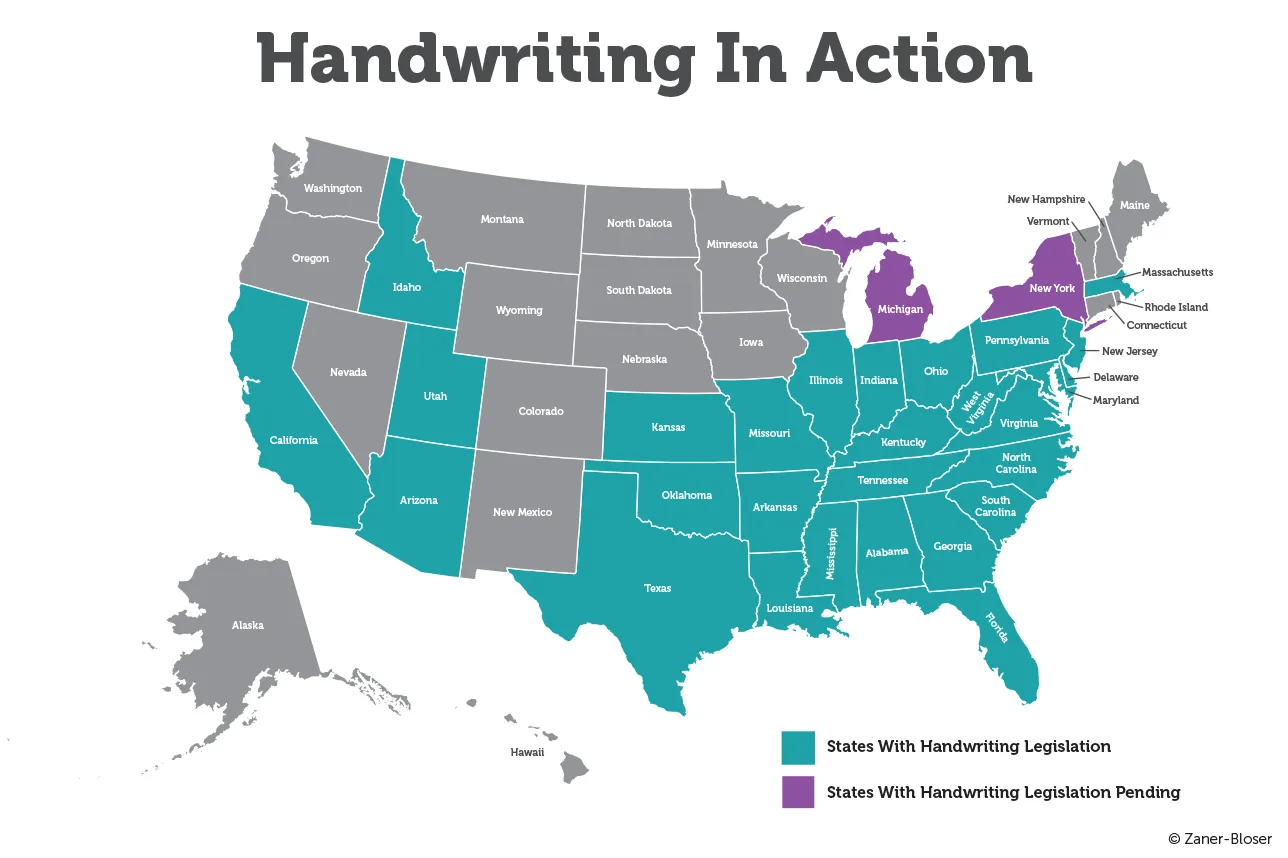
At least half of U.S. states currently have laws requiring schools to teach cursive handwriting. That number has nearly doubled in ten years and may continue to rise.
Which States Require Cursive Instruction?
North Carolina was among the first states to pass a law requiring cursive instruction in 2013. The “Back to Basics” bill, as it was called at the time, arose in response to the Common Core State Standards that prioritized digital literacy and keyboarding skills without specifically requiring cursive instruction.
Pennsylvania, New Jersey, and Idaho are among the newest states to pass laws requiring cursive. New York and Michigan are reviewing bills now. See the map for a more complete list.
Cursive Receives Bipartisan Support
Bills requiring cursive instruction usually receive bipartisan support. California’s Assembly Bill 446 passed in 2023, for example, with a final vote of 79-0 in favor of the bill. One Assemblymember was absent and did not cast a vote.
Pennsylvania's bill passed in February 2026 with a vote of 42-5 plus three abstaining. Supporters included 19 Democrats and 23 Republicans.
What Existing Laws Say about Teaching Handwriting
Handwriting legislation tends to be specific to cursive instruction since manuscript instruction remains a norm in schools. While language varies, these laws typically mandate that cursive handwriting be explicitly taught as part of the elementary curriculum. Sometimes the law specifies the grade levels when cursive instruction should begin or proficiency should be reached.
Idaho Senate Bill 1044, for example, requires cursive instruction to begin by grade 3 and requires proficiency in cursive by the end of grade 5. “Cursive handwriting proficiency” is even defined in the bill to mean that “students can write legibly in cursive.” The bill further describes how the requirement will be supported.
The state department of education shall:
- Set benchmarks for cursive handwriting proficiency.
- Provide guidelines and examples for assessing student progress.
- Share resources to assist teachers in providing effective cursive handwriting instruction.
— Idaho Senate Bill 1044
It's not uncommon for state laws to address what is taught in schools. The recent Idaho bill, for instance, actually amends existing code governing “Courses of Instruction” in public schools. Financial literacy, civics and government, and media literacy are additional topics of education commonly mandated by state laws.
Support for Cursive in State Standards
States without handwriting-specific legislation often value handwriting instruction too. It may simply be addressed in state education standards—rather than by state law.
Georgia, for example, added cursive instruction to new standards implemented in 2025. The English Language Arts standards now require students in grades 3–5 to read and write cursive.
Similarly, Missouri does not have a law requiring cursive instruction, but the Missouri Learning Standards, approved in 2016, added the “ability to write legibly in cursive” as a required benchmark for grades 2–3.
Why Cursive Matters
The growing attention to cursive reflects broader public goals to improve students' literacy achievement. Handwriting is getting renewed recognition as a foundational skill that supports students’ development as readers and writers.
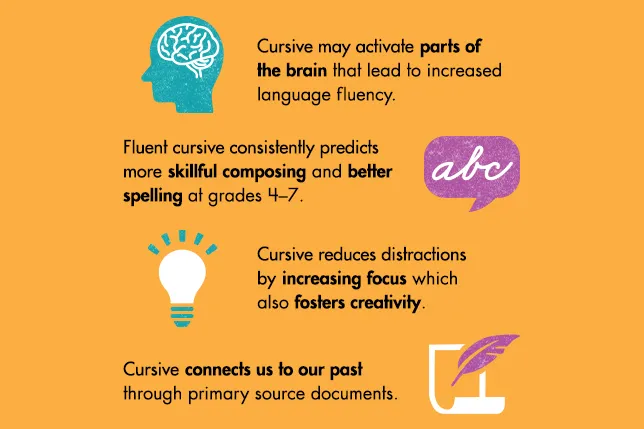
Handwriting success supports students’ reading, spelling, and written communication skills for the rest of their lives. Scientific research proves that handwriting matters.
- Cursive stimulates areas of the brain responsible for language fluency.
- Students with fluent cursive demonstrate more skillful composition and accurate spelling in grades 4–7.
- The fluid, connected movement of cursive reduces interruptions so the mind can more easily focus on complex ideas.
- The ability to decipher cursive enables us to study primary source documents throughout history.
Zaner-Bloser Sets the Gold Standard
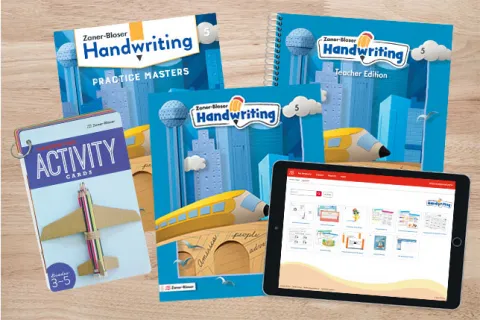
Handwriting instruction has always been a priority at Zaner-Bloser. Generations of students have learned manuscript and cursive using Zaner-Bloser’s four simple strokes, Four Keys to Legibility, and explicit three-step lessons. Explore Zaner-Bloser Handwriting online or ask your sales consultant for more information.
You May Also Like