What School Administrators Need to Know About Handwriting Instruction

As a result of all we’ve learned cumulatively from decades of scientific research, handwriting is quickly becoming a nonnegotiable part of the literacy curriculum, even beyond grade 2. In fact, many states have passed legislation mandating cursive instruction to ensure that all students reap its benefits.
Why? Simply put, handwriting builds brain pathways that support literacy achievement.
Writing letters and words helps students recognize letters and words when they read.
When word recognition and word generation become automatic, students can read and write without having to think a lot about it.
Cursive accelerates the whole process because it is a fast, fluid movement.
Speed matters because it frees up mental space to think deeply. Fluent readers can comprehend challenging texts, and fluent writers can compose sophisticated texts. Their minds are free to wrestle with ideas, concepts, nuance, and style.
If your state is among those now requiring cursive instruction, you may be wondering, What, exactly, does it take to reap the benefits?
If your district or school is in the midst of adopting new English language arts (ELA) materials, you may also be asking, Is the handwriting instruction in my core curriculum enough?
4 Questions Every Elementary School Administrator Should Ask
Whether you are choosing ELA core materials, evaluating handwriting-specific supplemental programs, or simply taking a constructive look at your current approach to handwriting instruction, there are a handful of questions to consider.
These are questions you likely ask when you evaluate curriculum in any subject matter, but it can be helpful to specifically name what you expect to see in high-quality handwriting materials.
1. Is Handwriting Being Explicitly Taught?
Handwriting practice and handwriting instruction are not synonymous. Adequate time and methods of practice are certainly important, but practice alone is not enough. There’s real teaching to do—and an ideal order for those lessons.
Teacher-Led Lessons
Students cannot simply see a letter and discern for themselves how to reproduce it. They need to see the individual strokes required to make it. The simpler and fewer the strokes, the better.
A hands-on demonstration by the teacher, showing students each step in writing the letter, is effective. This direct instruction is best delivered in short, 10- to 15-minute sessions that occur at least three days per week.
Visual Models
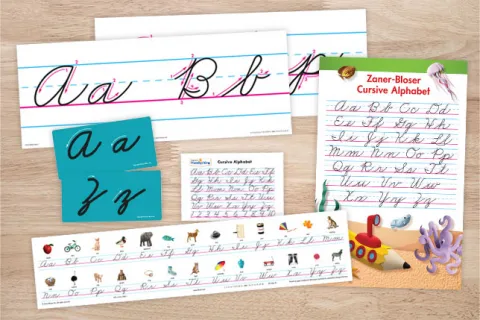
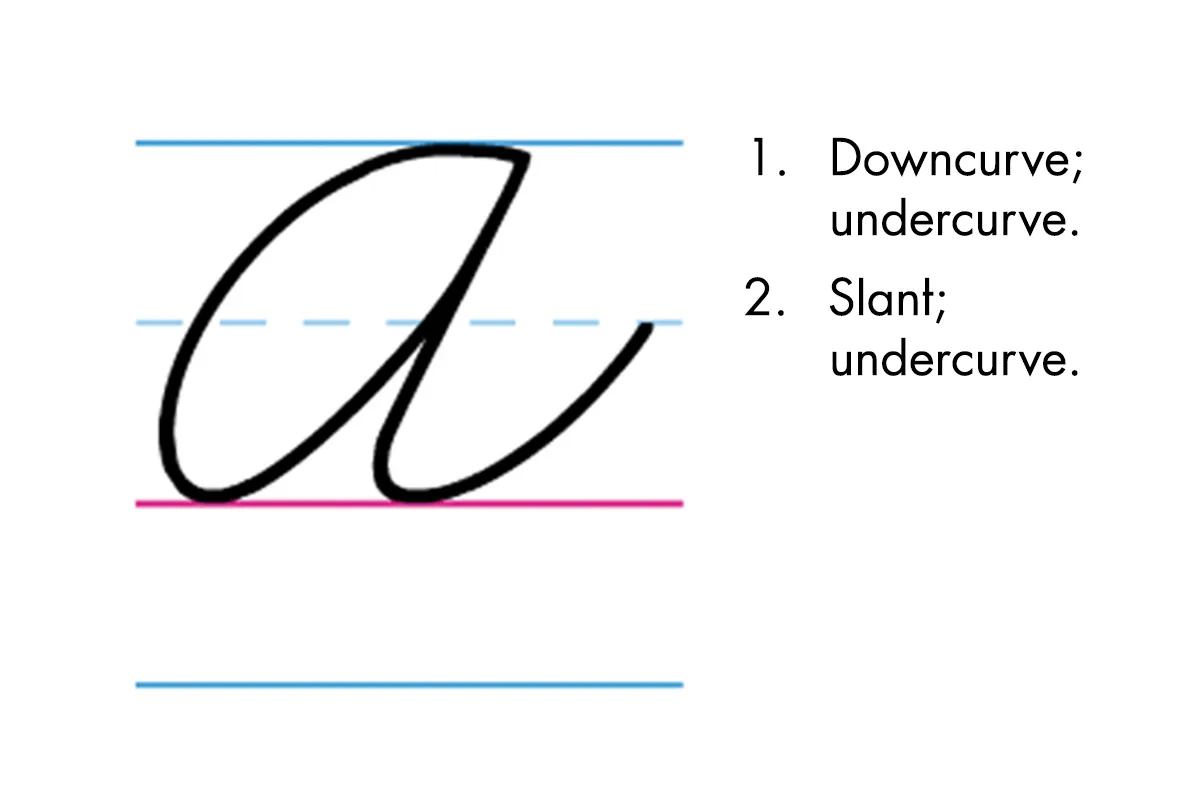
Visual letter models are also helpful. Effective models contain numbered arrows indicating the order, direction, and nature of strokes required to produce the letter. Students need opportunities to practice forming the letter in different contexts:
Tracing the model letter
Writing the letter while looking at the model
Reproducing the letter from memory
Practice pages ideally mirror this scaffolding. Having an effective model on some practice pages enables students to copy it without having to look back and forth between their paper and the teacher’s model at the front of the classroom.
Appropriate Sequence
The sequence of handwriting lessons matters.
Letters that are easier for students to produce should be introduced before more difficult ones.
Letters formed in similar ways or that share common characteristics should be grouped together.
Letters that occur more frequently should be prioritized over less common letters.
Letters that are commonly confused or reversed—such as u and n or d and b—should not be included in the same unit.
Students should master forming each individual letter before proceeding to connect letters into words and words into sentences.
Instructional Best Practices
Effective handwriting lessons reflect best practices of learning science. Explore the handwriting curriculum you’re currently using—or any you’re considering for adoption—in search of key elements:
Predictable lesson structure
Ample opportunities to practice and make mistakes
Emphasis on incremental growth
Spiraled practice
Real-world application of skills
Small, gradual steps help students experience many successes and grow confident in the classroom.
2. How Are Students Engaging in Handwriting Practice?
Students need to be actively engaged to learn, because engagement affects both motivation and the amount of knowledge transferred. Students are quite simply more interested and remember more when they’re participating as thinkers and doers. They also need a sense of ownership in their learning.
What does active participation and ownership look like in practical terms for a subject like handwriting?
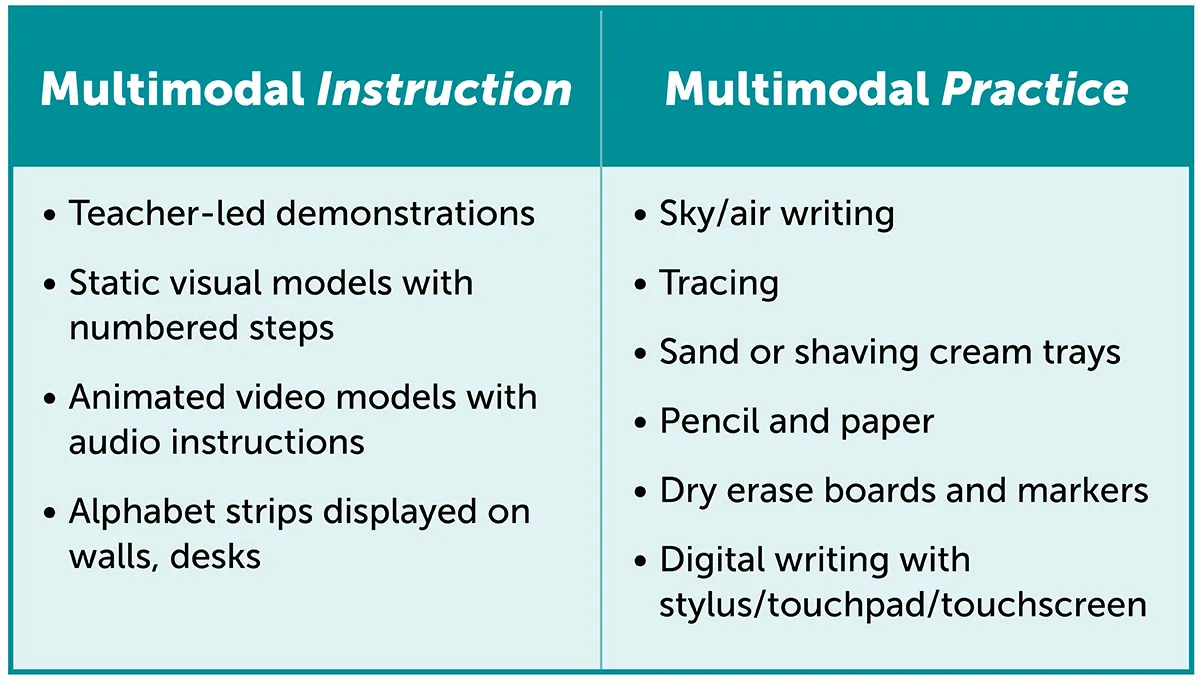
Multimodal Activities
Students receive handwriting instruction through varied modes and also practice handwriting with multisensory tools.
Self-Directed Practice
Choice strengthens feelings of autonomy and ownership in learning. In terms of handwriting, students might choose from a set of practice activities, decide when to complete each activity in an assigned set, or even select their best work to turn in for a grade.
Self-directed practice requires clear goals and assessment criteria. Students must know exactly what they are expected to achieve in order to know if they’ve accomplished it. Equipped with clearly stated objectives and evaluation checklists or rubrics, students can truly take responsibility for their growth.

3. How Are Handwriting Skills Evaluated?
So about those evaluation criteria. . . state standards and legislation often indicate that legibility is the goal of handwriting instruction. In a world where every adult’s handwriting is nearly as unique as their voice or fingerprint, the word legibility alone may be too abstract or subjective to be useful in the classroom. Instead, your handwriting program needs to define what makes manuscript or cursive legible.
The science of occupational therapy provides some guidance in this regard by emphasizing consistency in size, alignment, and spacing among letters on a page. The sequence, direction, and stroke of the lines used to construct the letters is also evaluated in occupational therapy. These characteristics should serve as the basis for handwriting assessment in classrooms.
Student-Friendly Language
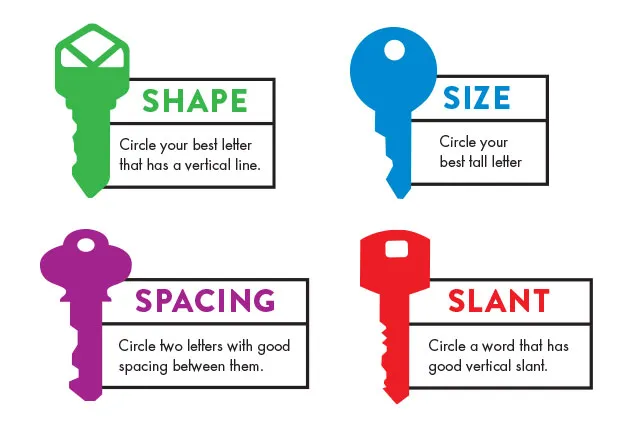
Learning science tells us that students perform best and ultimately achieve more when they understand the desired outcomes. When they know exactly what they’re working towards, they are motivated, able to self-assess and self-correct, and can engage in deliberate practice. It’s important, then, that legibility is defined in student-friendly language for them.
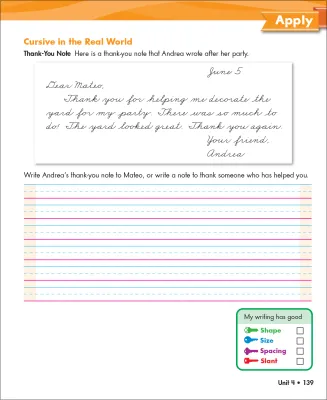
Zaner-Bloser Handwriting, for example, teaches students Four Keys to Legibility: shape, size, spacing, and slant.
Relevant Subskills
Scientists have also observed and named several subskills that are required for handwriting achievement. These include fine motor skills (e.g., hand strength and dexterity), hand-eye coordination, posture and body positioning, space and visual perception, and sensory processing (e.g., how much pressure to put on the pencil). High-quality handwriting programs strengthen these subskills through intentionally designed activities, materials, and methods of instruction. Teacher materials should also provide contextualized support for identifying and overcoming specific types of struggles.
4. How Does the Handwriting Curriculum Connect to Students' Lives?
As developmentally appropriate, handwriting practice should include real-life applications of handwriting skills. Crafting stories, writing book reviews, and composing letters provide opportunities to practice handwriting and other ELA skills simultaneously. Exercises such as creating timelines or agendas, labeling diagrams, and writing proper nouns provide opportunities to connect handwriting to other content areas.
High-quality handwriting materials will also help students extend learning beyond the classroom. Strong connections are established when simple materials are available to send home to help adult caregivers know what students are working on and how they can support student growth.
Zaner-Bloser Sets the Gold Standard
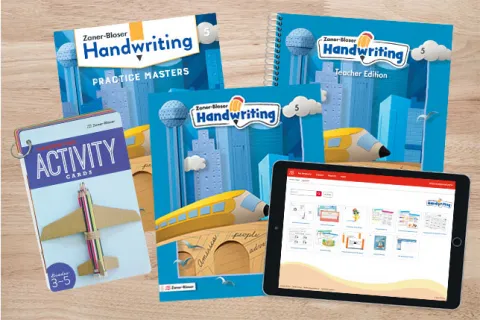
Zaner-Bloser has been a leader in handwriting instruction for nearly 140 years! Our programs have evolved as new learning research and technologies have emerged—including digital tools that deeply engage students and support teachers in delivering instruction—but the proven Zaner-Bloser method remains consistent.
3-step lessons
4 simple strokes
4 Keys to Legibility
Explore Zaner-Bloser Handwriting online or ask your sales consultant for more information.
You May Also Like